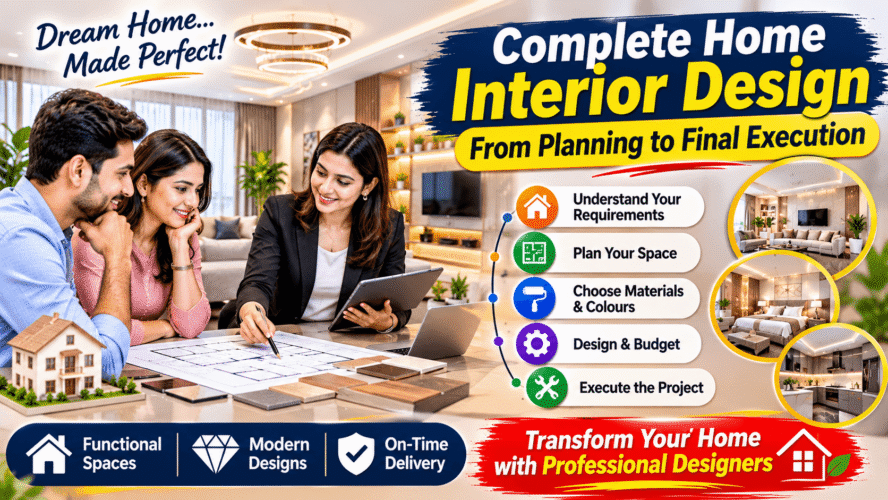
Creating a beautiful home is about more than choosing stylish furniture and attractive colours. It requires thoughtful planning, smart space utilisation and the right design approach. Interior Designers in Noida help homeowners transform empty spaces into comfortable, functional and visually appealing homes that reflect their lifestyle and personal taste.
Whether you are designing a new apartment or renovating an existing property, Interior Designers in Noida can guide you through every stage, from the initial layout and material selection to furniture installation and final finishing. A well-planned home interior ensures that every corner serves a purpose while maintaining a consistent design theme.
1. Understanding Your Requirements and Lifestyle
The first step in complete home interior design is understanding your family’s needs, daily routine and design preferences. Every home has different requirements, so the planning process should focus on functionality as well as appearance.
Before starting the project, consider your budget, available space, storage requirements and preferred interior style. This helps create a clear design direction and avoids unnecessary changes during execution.
2. Space Planning and Interior Layout Design
Effective space planning makes a home more comfortable and organised. A well-designed layout ensures that furniture, lighting and storage solutions fit naturally without making rooms feel crowded.
Planning Each Area of Your Home
- Living Room: Focus on comfortable seating, entertainment units and functional furniture.
- Bedroom: Include suitable wardrobes, comfortable beds and practical storage.
- Modular Kitchen: Plan cabinets, countertops and appliances for easy movement.
- Bathroom: Select space-saving fittings, suitable tiles and moisture-resistant materials.
- Dining Area: Create a practical arrangement with appropriate furniture and lighting.
A thoughtful layout is the foundation of modern home interior design, helping homeowners achieve a balance between aesthetics and everyday comfort.
3. Material Selection, Colours and Furniture
Choosing the right materials and finishes plays an important role in the overall appearance and durability of your home. Flooring, wall finishes, laminates, countertops, hardware and furniture should complement each other.
Consider materials that match your budget and maintenance preferences. Neutral shades, wooden textures and subtle accent colours can create a timeless look, while carefully selected lighting adds warmth and character.
Customised furniture and modular storage solutions can also improve space utilisation, especially in apartments where every square foot matter.
4. Design Visualisation and Budget Planning
Once the layout and materials are finalised, the next step is preparing detailed designs and estimating project costs. This stage helps homeowners understand how the proposed interiors will look before actual work begins.
A proper budget should include furniture, materials, electrical work, lighting, installation and finishing costs. Keeping a small contingency amount also helps manage unexpected expenses without affecting the project.
5. From Design to Final Execution
The execution stage turns the approved design into a functional living space. It involves coordinating different activities, maintaining quality standards and ensuring that work follows the planned timeline.
Important Execution Activities
- Civil modifications, electrical and plumbing work.
- Flooring, painting and wall treatments.
- Modular kitchen, wardrobes and furniture installation.
- Lighting, fixtures and decorative elements.
- Final inspection, cleaning and quality checks.
Professional project management helps maintain consistency and reduces delays during residential interior design services.
6. Choose the Right Interior Design Professionals
Selecting the right professionals is essential for achieving the desired results. Before finalising a company, review its previous projects, material quality, design approach, pricing and execution capabilities.
Choose the right interior designers who understand your requirements, communicate clearly and provide complete support throughout the project. Experienced professionals can help manage planning, design, material selection and installation under one coordinated process.
Conclusion
A successful home transformation requires careful planning, creative design and proper execution. From understanding your lifestyle and selecting materials to installing furniture and completing final finishing, every stage contributes to the overall result. Investing in complete home interior design helps create a space that is functional, comfortable and visually appealing.
If you are planning to transform your home, connect with experienced interior design professionals to discuss your requirements, explore design possibilities and plan your project. Start creating a home that truly reflects your lifestyle and personality.